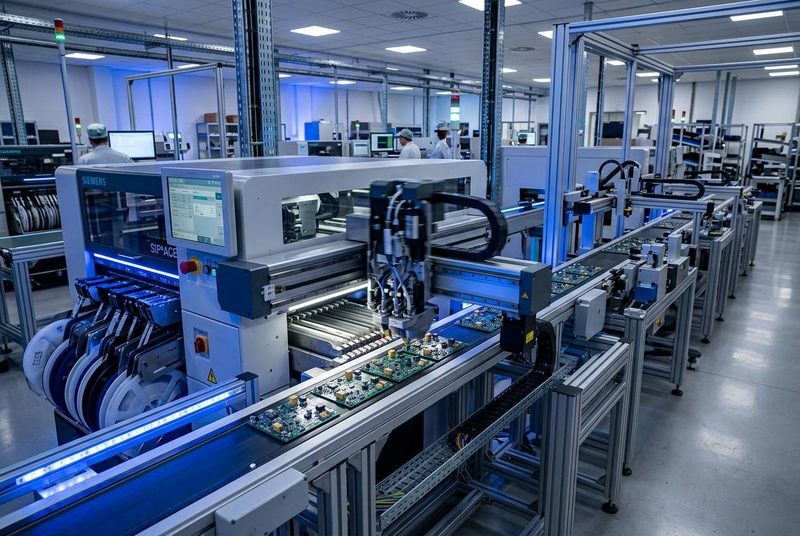
A Comprehensive Guide to SMT Production Line Selection
When your company is ready to scale up PCB assembly operations, selecting the right Surface Mount Technology (SMT) production line becomes one of the most critical decisions you will make. The choices you make today will directly impact your manufacturing efficiency, product quality, and long-term operational costs for years to come. Whether you are establishing your first SMT line, upgrading an existing facility, or expanding your production capacity, understanding the key factors in SMT production line selection can save you significant time, money, and operational headaches.
This guide walks you through everything you need to know about choosing an SMT automation setup that aligns with your factory's specific needs, from the fundamental components of a production line to budget-conscious configuration strategies for businesses of every size.
Understanding the Basic Components of an SMT Production Line
Before diving into the selection process, it is essential to understand what an SMT production line actually consists of. A complete, automated SMT line typically integrates multiple workstations that work together to transform bare PCBs into fully assembled electronic modules. While configurations vary by product type and automation level, most modern SMT lines share a set of core stations.
The 7 Core Stations of a Modern SMT Production Line
1. PCBA Loading Station
The process begins with the PCBA loading station, where bare printed circuit boards are automatically fed into the production line. This station uses precision conveyors and alignment systems to ensure each board enters the line at the correct position and orientation. High-quality loading systems minimize board handling damage and ensure consistent start points for subsequent processes.
2. Solder Paste Printing
While not always counted as a separate "station" in every configuration, solder paste printing is a fundamental step that typically occurs at the line entry. A precision stencil printer applies solder paste to the PCB pads according to the design files, creating the foundation for component attachment. The accuracy of this step directly affects the quality of every subsequent joint.
3. Pick and Place
The heart of any SMT line, the pick and place machine automatically positions surface mount components onto the PCB pads with sub-millimeter precision. Modern placement systems can handle components ranging from tiny 01005 resistors to large BGA packages and connectors, placing thousands of components per hour depending on the machine's specification.
4. Reflow Soldering
After component placement, boards pass through a reflow oven where controlled heating profiles melt the solder paste, creating permanent electrical and mechanical connections. Temperature profiling is critical here, as different solder alloys and component thermal tolerances require carefully optimized heating curves.
5. ICT/FCT Testing Station
In-circuit testing (ICT) and functional testing (FCT) stations verify that each assembled board operates correctly. ICT checks for shorts, opens, and component values using test probes contacting specific points on the board. FCT verifies the board performs its intended functions under real operating conditions. These testing stations are essential for quality assurance and defect detection before products reach customers.
6. Glue Dispensing Station
For applications requiring additional mechanical reinforcement, a glue dispensing station applies adhesive to secure components. This is particularly important for boards subject to vibration, thermal cycling, or mechanical stress. The dispensing system precisely controls the amount and placement of adhesive to avoid interference with solder joints or component clearances.
7. Depaneling and Board Flipping Station
After assembly and testing, individual boards that were processed in panel form must be separated. The depaneling station uses routing, v-scoring, or punching methods to separate boards cleanly without damaging components. For double-sided assemblies, a board flipping station rotates the PCB so that components can be placed and soldered on the second side.
8. Robotic Unloading and Packaging
The final station handles the completed assemblies, removing them from the production line and preparing them for packaging or further processing. Robotic systems can sort, stack, and tray completed boards based on test results, directing passing boards to packaging while flagging failed units for inspection.
Key Factors to Consider When Selecting Your SMT Production Line
Selecting the right SMT line requires carefully balancing multiple factors. There is no universal solution that works for every factory. The optimal configuration depends on your specific operational context, product requirements, and business objectives.
Production Capacity Requirements
Your throughput needs should be the starting point for any SMT line selection. Ask yourself: how many boards do I need to produce per shift, per day, or per month? This question drives nearly every other decision in your configuration.
For high-volume production runs, you will need lines with faster cycle times, automated material handling, and minimal changeover intervals. If your production is more diversified with smaller batches and frequent product switches, you may prioritize changeover speed and flexibility over raw speed. Some factories benefit from multiple medium-speed lines rather than a single high-speed line, as this provides greater scheduling flexibility.
Consider not just your current production volumes but also your growth trajectory. A line that meets your needs today may become a bottleneck within two to three years. Building in some capacity margin upfront can extend the useful life of your investment.
PCB Size and Complexity
The physical dimensions and complexity of the boards you produce directly influence the equipment specifications you need. Standard PCB sizes range from small-format boards for consumer electronics to large-format boards for industrial control systems. Your pick and place machines, conveyors, and handling equipment must accommodate your largest board dimensions with adequate clearance.
Component density and complexity also matter. Boards with fine-pitch components, BGAs, QFNs, or chip-scale packages require placement machines with higher placement accuracy and better vision systems. If your product mix includes both simple and complex boards, your line configuration should be capable of handling your most demanding products.
Component Types and Mix
The variety of components in your product portfolio affects multiple aspects of your SMT production line. Consider the range of component packages you need to place: resistor and capacitor sizes, IC packages, connectors, and any through-hole components that may require selective soldering or manual insertion.
Some components are sensitive to moisture and require baking before assembly. Others have specific handling requirements related to electrostatic discharge (ESD) protection. Your facility layout, storage conditions, and line configuration should account for these material requirements.
If you work with lead-free solders, ensure your reflow oven can achieve the higher temperatures required for lead-free processing. Similarly, if you produce boards for automotive, medical, or aerospace applications, you may need to meet specific quality and traceability standards that influence your equipment selection.
Budget and Return on Investment
Budget constraints are a reality for every factory, but it is important to approach budget decisions strategically. The lowest-cost option is rarely the most economical choice when you factor in productivity, reliability, maintenance costs, and the total cost of ownership over the equipment's lifespan.
When evaluating costs, consider not only the initial capital expenditure but also:
- Installation and commissioning costs
- Operator training expenses
- Ongoing maintenance and spare parts
- Energy consumption
- Yield rates and first-pass success
- Changeover time and flexibility costs
- Compliance and certification expenses
A well-configured SMT line with quality components may carry a higher upfront price but typically delivers better return on investment through higher reliability, lower maintenance costs, and better production consistency.
SMT Configuration Recommendations for Different Business Sizes
Small-Scale Operations: Entry-Level Configurations
If you are launching a new SMT operation or serving a niche market with lower volumes, an entry-level configuration can provide an excellent starting point without overcommitting capital. A basic SMT line for small-scale operations typically includes a manual or semi-automatic stencil printer, a medium-speed pick and place machine with standard placement accuracy, a compact reflow oven, and basic testing capabilities.
For small operations, prioritize flexibility and ease of use. Equipment that is easy to program, maintain, and operate will deliver more value than maximum throughput specifications you may not fully utilize. Look for machines that can handle a wide range of board sizes and component types, as your product mix may evolve over time.
Many small factories benefit from a phased approach: start with a capable but not over-specified configuration, prove your market, and expand as demand grows. This strategy reduces initial risk while preserving capital for other business needs.
Mid-Size Operations: Balanced Configurations
Mid-size factories typically require more sophisticated automation to meet production targets while maintaining quality. A mid-size SMT configuration might include dual-lane or wide-format stencil printing, high-speed pick and place with multiple placement heads, a larger reflow oven with closed-loop temperature control, automated AOI (automated optical inspection) before and after reflow, and integrated ICT/FCT testing.
At this scale, integration between stations becomes important. Look for equipment that supports common communication protocols and data exchange formats, enabling your production management system to track boards through the line, collect yield data, and identify quality trends.
Mid-size operations should also consider the importance of real-time monitoring and data collection. Modern SMT equipment with built-in analytics can help you identify emerging quality issues before they result in significant scrap or rework costs.
Large-Scale Operations: High-Automation Configurations
Large-volume manufacturers require fully automated, high-throughput SMT lines with minimal human intervention. These configurations typically feature fully automatic stencil printing systems with inspection capabilities, multiple high-speed pick and place machines arranged for optimal throughput, large-format reflow ovens with nitrogen atmosphere capability, comprehensive inline inspection systems, and automated material handling with smart warehouse integration.
At this scale, line utilization becomes a critical metric. Every minute of unplanned downtime costs money. Prioritize equipment with proven reliability records, accessible service support, and robust preventive maintenance programs. Predictive maintenance using sensor data and analytics can help you avoid unexpected failures that disrupt production schedules.
Large operations also benefit from complete turnkey solutions that integrate multiple equipment vendors into a cohesive system. This approach simplifies procurement, installation, and ongoing support while ensuring all components work together seamlessly.
The Importance of Quality Brand Components
When evaluating SMT equipment options, pay close attention to the components and subsystems used within each machine. The brands that equip an SMT line speak volumes about its quality, reliability, and serviceability.
Quality brand components contribute to your SMT line's performance in several important ways:
SMC Pneumatic Cylinders provide the precise, repeatable motion that many SMT stations require. SMC is a globally recognized leader in pneumatic components, known for compact design, long service life, and consistent performance under continuous manufacturing conditions.
Mitsubishi PLCs serve as the control brain for many SMT machines. Mitsubishi programmable logic controllers are renowned for their reliability, processing speed, and extensive programming ecosystem. When your PLC runs thousands of cycles per day, the dependability of a quality brand prevents production interruptions.
Advantech Industrial PCs power the user interfaces and data processing functions of modern SMT equipment. Advantech IPCs are designed for industrial environments with features like fanless operation, wide temperature ranges, and long-term availability, ensuring your equipment remains supported years after installation.
Omron Sensors provide the precise feedback that automated systems need to operate accurately. From vision systems to proximity sensors to temperature monitors, Omron components are known for their accuracy, repeatability, and durability in demanding manufacturing environments.
Other Quality Brands that frequently appear in well-specified SMT equipment include Panasonic servo motors, THK linear guides, HIWIN ball screws, and Finder relays. Each of these brands has earned its reputation through decades of reliable service in precision manufacturing applications.
Equipment built with quality components may cost more initially, but the difference in maintenance frequency, spare parts availability, and mean time between failures makes quality components the more economical choice over the life of your equipment.
Why Turnkey SMT Solutions Make Sense
For many factories, particularly those establishing or significantly upgrading their SMT capabilities, a turnkey SMT solution offers compelling advantages over piecing together equipment from multiple vendors.
Single-Point Responsibility: With a turnkey solution, you work with one vendor who takes responsibility for the entire system. This simplifies communication, reduces finger-pointing when issues arise, and ensures that all components are specified to work together correctly.
Integrated System Design: A turnkey provider designs the complete line as an integrated system, ensuring that conveyor widths, board handling specifications, cycle times, and data interfaces all align. When you mix equipment from different vendors yourself, you may encounter compatibility issues that require costly modifications to resolve.
Streamlined Installation and Commissioning: Turnkey providers typically include installation, commissioning, and initial operator training as part of the solution. This accelerates your time to production and reduces the burden on your internal team. You benefit from the provider's experience with similar installations, avoiding common pitfalls that first-time SMT buyers often encounter.
Unified Support and Service: When something needs attention, you contact one provider rather than chasing down multiple equipment vendors. This is particularly valuable during the warranty period and for ongoing preventive maintenance. A single service relationship is far more efficient than managing a roster of different vendors.
Proven Compatibility: Turnkey providers have typically validated their system configurations through multiple installations. You benefit from their accumulated experience and refinement rather than becoming a test case for untested combinations.
Keli Automation: Your Partner in SMT Production Line Success
Keli Automation has nearly 30 years of experience helping factories around the world design, implement, and optimize their SMT production lines. Our team of engineers brings deep expertise in PCB assembly line setup, from initial consultation and capacity planning through equipment specification, installation, and ongoing support.
We take pride in delivering SMT automation solutions that meet international quality standards. All our equipment undergoes rigorous testing and carries both ISO and CE certifications, giving you confidence that your investment meets global manufacturing requirements. From compact entry-level lines to high-volume automated systems, Keli Automation offers configurations scaled to match factories of every size.
Our commitment to quality extends to every component we specify. By partnering with leading brands including SMC, Mitsubishi, Advantech, and Omron, we ensure that your SMT production line delivers reliable performance year after year.
Take the Next Step Toward Your Ideal SMT Configuration
Choosing the right SMT production line is a significant decision that affects your factory's competitiveness, quality, and growth potential for years to come. Whether you are just starting your SMT journey or looking to upgrade an established operation, the principles in this guide can help you navigate the selection process with confidence.
Keli Automation is ready to help you evaluate your options, understand your requirements, and design a configuration that fits your specific needs. Our team welcomes the opportunity to discuss your production goals and recommend solutions that align with your objectives and budget.
Contact us today to start the conversation. Reach our team by email at info@e-kli.com or call us at (+86) 400-076-9629. We look forward to learning about your projects and helping you build an SMT production line that drives your business forward.